
Renovating an Occupied Building: How Should the Work Be Phased?
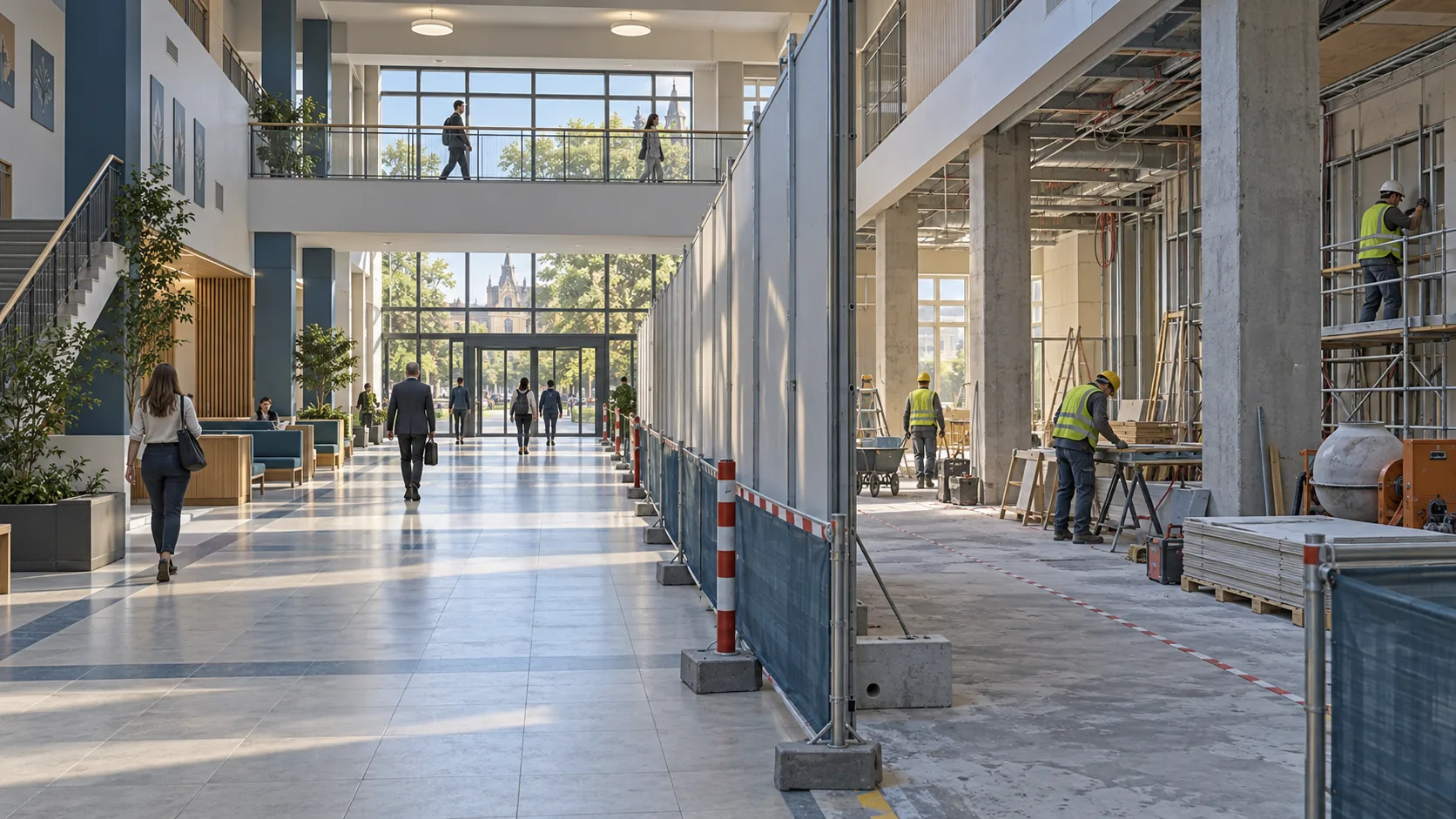
Renovating an empty building and altering an institution that remains in use are different organisational tasks. In the latter case, the route to the finished result affects staff, visitors and operations. Phasing therefore needs attention from the design stage, not only once construction begins.
Which daily activities must continue?
Identify the rooms and routes that must remain available during each phase. Work-area separation, delivery routes and temporary relocations need to be considered together. If one phase can start only after another is complete, show that dependency in the early plan.
Disruptive work needs separate coordination
Noise, dust, vibration and temporary access limits can arise during an alteration. How to manage them depends on the site, its use and the relevant specialists. Instead of relying on a generic schedule, map the work phases against actual operating hours and assign responsibility for informing affected people.
Give everyone the same update when plans change
In an occupied building, daily conditions may differ from initial assumptions. If a route or work phase changes, the client, operator and relevant construction participants need the updated information. For an initial conversation about IVVPRO’s alteration and general contracting services, gather the room-use schedule and identify functions that cannot be interrupted.
The featured image is an AI-generated illustration of renovation during operation; it is not an IVVPRO worksite.